



Órgano y trombón: barroco y vanguardia
Synopsis
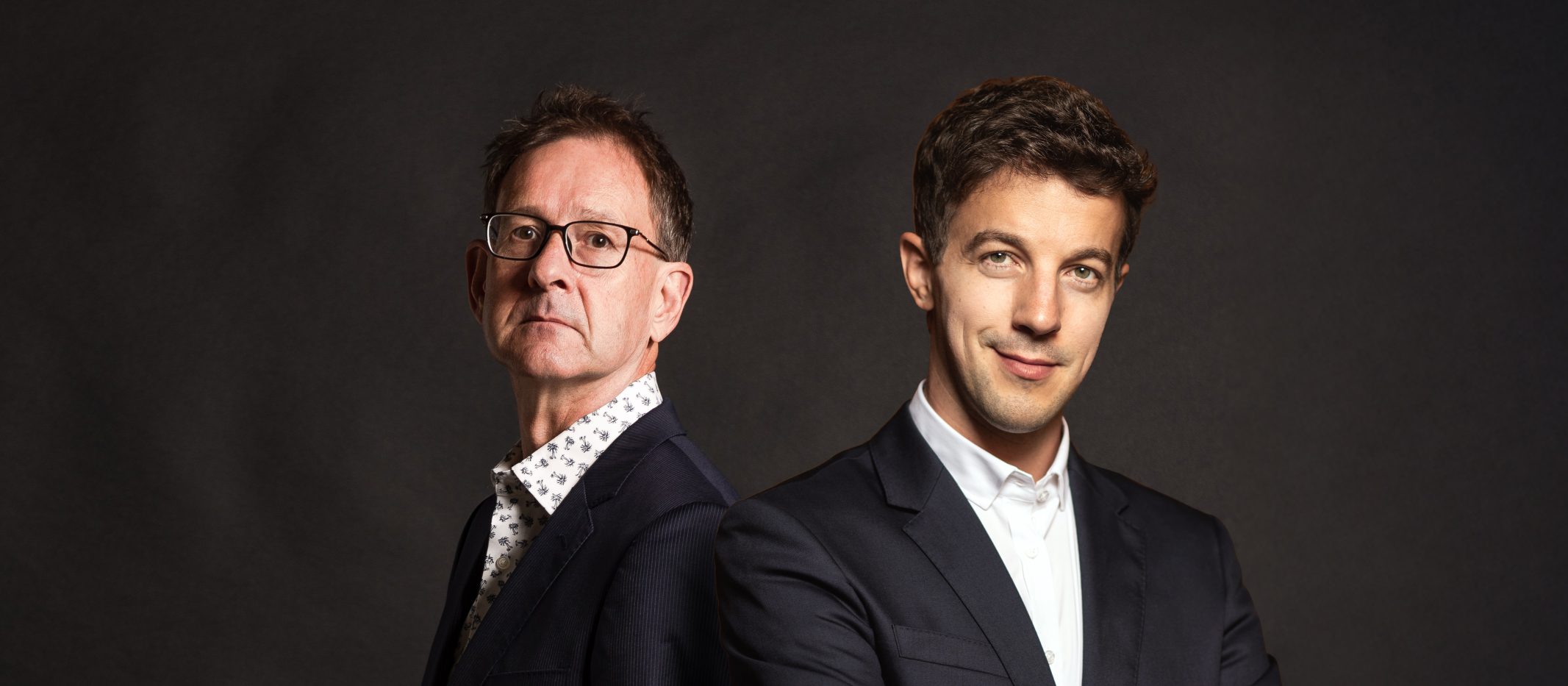
Auditorio de Tenerife presents another of its organ concerts: Johannes Berger (organ) and Ian Bousfield (trombone).
This musical journey from Baroque to avant-garde brings together organ and trombone. It begins with an introduction to the organ through one of the master of masters’ best-known symphonies, Johann Sebastian Bach. Next, we travel back to early Baroque and Giovanni Martino Cesare, an Italian musician who worked in several noble houses in Bavaria as a cornet player and composed several Canzone. His work La Hieronyma was published in 1621. Our concert then returns to Bach and his arrangement of Marcello’s Oboe Concerto for organ and a solo instrument. Such arrangements were common practice during the period, as artists used transcriptions to study their contemporaries’ works. An example of this is Bach’s Concerto for Four Pianos, based on Vivaldi’s Concerto for Four Violins.
Felix Mendelssohn was an admirer of Bach who revived interest in his works during the Romantic period. Well-versed in traditional German sacred music, Mendelssohn served as director of the Gewandhaus concert hall in Leipzig between 1835 and 1841 and went on to found there the first music university in Germany in 1843. His Variations Sérieuses, Op. 54 was composed for solo piano to raise funds for the erection of a bronze statue of Ludwig van Beethoven in his hometown of Bonn.
Kol Nidrei is among the best-known works of Cologne-born composer Max Bruch. It is based on the Kol Nidre declaration, which is recited during the evening service on Yom Kippur, the holiest day of the year in Judaism. Although Max Bruch was a Protestant, the publication of this work led many to assume that he was Jewish, which in turn resulted in his compositions being restricted in Nazi Germany.
We leap ahead to the present with Franco-Lebanese composer Naji Hakim, whose Arabesques was a required piece in the organ category of the 2011 ARD Music Competition. Regarding this suite for organ, Hakim has stated that singing and dancing are at its very core, and that it is built on the exchange and mutual influence between jazz and traditional Mediterranean music.
Our concert continues with Russian-German composer Alfred Schnittke, born in 1934 in the Soviet Union to a Jewish father from Frankfurt and a Volga German mother. His oeuvre is an example of the ongoing exchange between Eastern and Western Europe. Although his compositions were highly successful in Western Europe, in the Soviet Union, they were considered too experimental and unsuitable for representing the government’s cultural policies.
Our concert draws to a close with a work of French organist Alexandre Guilmant, who caused a sensation with his performances at the ceremonies inaugurating the organs of Saint-Sulpice and Notre-Dame in Paris. He founded the Schola Cantorum music school in Paris and later taught organ at the Conservatory of Paris (coinciding with the appointment of Gabriel Fauré as the school’s director). Guilmant’s Morceau Symphonique, composed in 1902, was a competition work at the Conservatory of Paris that same year.
Programme
Johann Sebastian Bach (1685 – 1750)
Toccata & Fugue in F Major, BWV 540
Giovanni Martino Cesare (1590 – 1667)
La Hieronyma
Johann Sebastian Bach (1685 – 1750)/Marcello (1673 – 1747)
Concerto in D Minor, BWV 974
Andante e spicatto
Adagio
Presto
Felix Mendelssohn-Bartholdy (1809 – 1847)
Sonata in A Major Op 65 N.3
Con moto maestoso
Andante tranquillo
Max Bruch (1838 – 1920)
Kol Nidrei Op.47
Naji Hakim (1955 -)
Rondeau (from Arabesques)
Alfred Schnittke (1934 – 1998)
Schall und Hall
Alexandre Guilmant (1837 – 1911)
Morceau Symphonique Op.88
Multimedia
Tickets
Access to the hall is not permitted once the doors are closed for the event to begin.
Access is only allowed to those over five years of age.
For further information, please check the general purchase terms and hall conditions.
If you have any questions while purchasing your tickets, please contact taquilla@auditoriodetenerife.com or call 922 568 625 from Monday to Friday, 10 a.m. to 2 p.m., except on public holidays.
12:00