



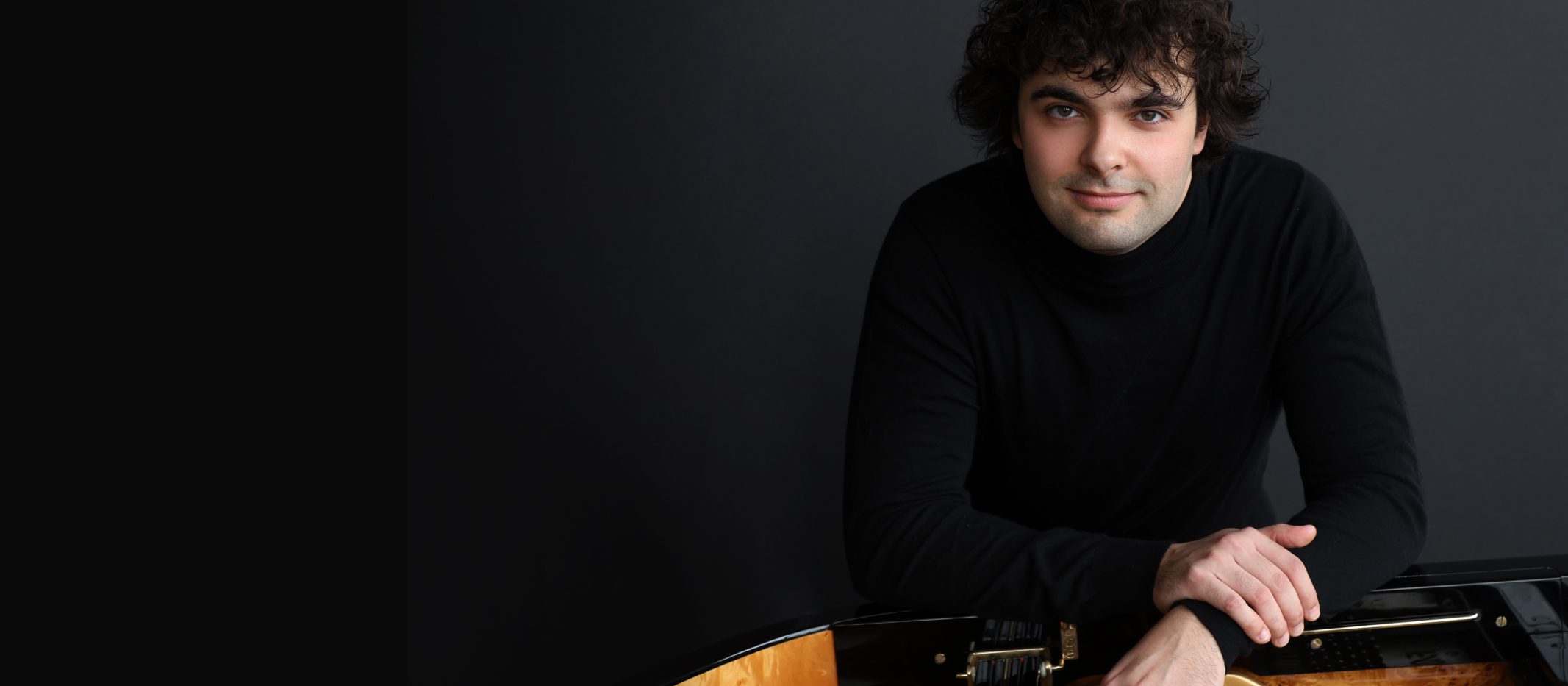
Martín García García
Synopsis
The Auditorio de Tenerife is presenting within the Pianísimo programme included in the Chamber Music Cycle a recital by Martín García García, who will perform the programme Odisea, leyenda y el ascenso hacia lo monumental (Odyssey, legend and the rise to monumentality) with pieces of Chopin and Liszt.
Odisea, leyenda y el ascenso hacia lo monumental
(Odyssey, legend and the rise to monumentality)
This recital charts a map of Romanticism where the piano speaks, dreams, and soars like architecture imagined in sound. The first part is devoted to Chopin, master of intimacy, who transforms emotion into form. Ballade No. 2 in F major, Op. 38 opens like a clearing among trees: a gentle song suddenly interrupted by the storm. The music breathes and darkens, returns to calm, and leaves the feeling of having heard a story told in the first person. The composer integrates extreme contrasts: a serene opening shaken by turbulent episodes.
Scherzo No. 4 in E major, Op. 54 displays luminous ingenuity. The discourse folds and unfolds with elegant irony, as if it were a game of rhythmic mirrors. In contrast, Scherzo No. 3 in C sharp minor, Op. 39 bursts forth with vehement energy. Its almost orchestral momentum cascades and echoes, demanding drive and imagination. In the centre, the Mazurkas, Op. 63 exude nostalgia for home. These condense years of research into a genre that Chopin elevated from popular dance to expressive laboratory. Rhythmic freedom, subtle harmonies, and stylised nostalgia reveal a language that, far from folklore, transforms Polish tradition into intimate art. The chapter devoted to the Polish genius culminates in Ballade No. 4 in F minor, Op. 52, one of the composer’s masterpieces. A structure that feels organic: no climax is gratuitous; no transition is imposed. Everything grows from within, with the underlying principles of works that are built to last.
After the interval, Liszt introduces a reflective atmosphere. Die Zelle in Nonnenwerth, S. 534/3, offers a tranquil, contemplative space. La Légende No. 2, S. 175 (Saint Francis of Paola walking on the waves), uses flowing arpeggios to evoke the movement of the undulating sea and the persistence of faith. The program concludes with the Sonata in B minor, S. 178, widely regarded as a pinnacle of the piano repertoire. This cyclical single-movement work features recurring, transformed themes that move through moments of invocation, prayer, scherzo of shadows and intimate choir, brilliance and silence. Liszt’s writing creates a vast musical structure like vaults, passageways, stained-glass windows that light up and fade away, leading to a conclusion that radiates rather than erupts.
The programme explores two perspectives on the grand romantic form: Chopin’s expressive concentration and Liszt’s expansive vision. Both demonstrate how the piano serves as a medium for intimacy, dramatic momentum, and profound sonic imagination. We will immerse ourselves in a journey from the ballad (the story), through the legend (the symbol), to the monumental form (the complete idea). This programme invites you to experience the piano as voice, dance, and orchestra, and to rediscover, on every page, the original emotion that defines Romanticism.
Programme
Frédéric Chopin (1810-1849)
Ballade Op. 38 in F major
Frédéric Chopin (1810-1849)
Scherzo Op. 54 in E major
Frédéric Chopin (1810-1849)
Scherzo Op. 39 in C sharp minor
Frédéric Chopin (1810-1849)
Three Mazurkas Op. 63
Frédéric Chopin (1810-1849)
Ballade Op. 52 in F minor
-Pausa-
Franz Liszt (1811-1886)
Die Zelle in Nonnenwerth S. 534iii (The Cell in Nonnenwerth)
Franz Liszt (1811-1886)
Légende S. 175 No. 2, St. François de Paule marchant sur les flots (Francis of Paola Walking on the Waves)
Franz Liszt (1811-1886)
Sonata in B minor, S. 178
About the pianist
Pianísimo Subscription
The Pianísimo Subscription 2025-2026 offers a 25% discount on buying the eight concerts of the current season: Bogdan Dugalic, Behzod Abduraimov, Esther Ropón & Ernst Surberg, Luis López, Anna Tsybuleva and Martín García García.
Tickets
Access to the hall is not permitted once the doors are closed for the event's start.
Access is only allowed to those over five years of age.
For further information, please check the general purchase terms and hall conditions.
If you have any questions while purchasing your tickets, please write to taquilla@auditoriodetenerife.com or call 922 568 625 from Monday to Friday from 10 a.m. to 2 p.m., except for public holidays.