



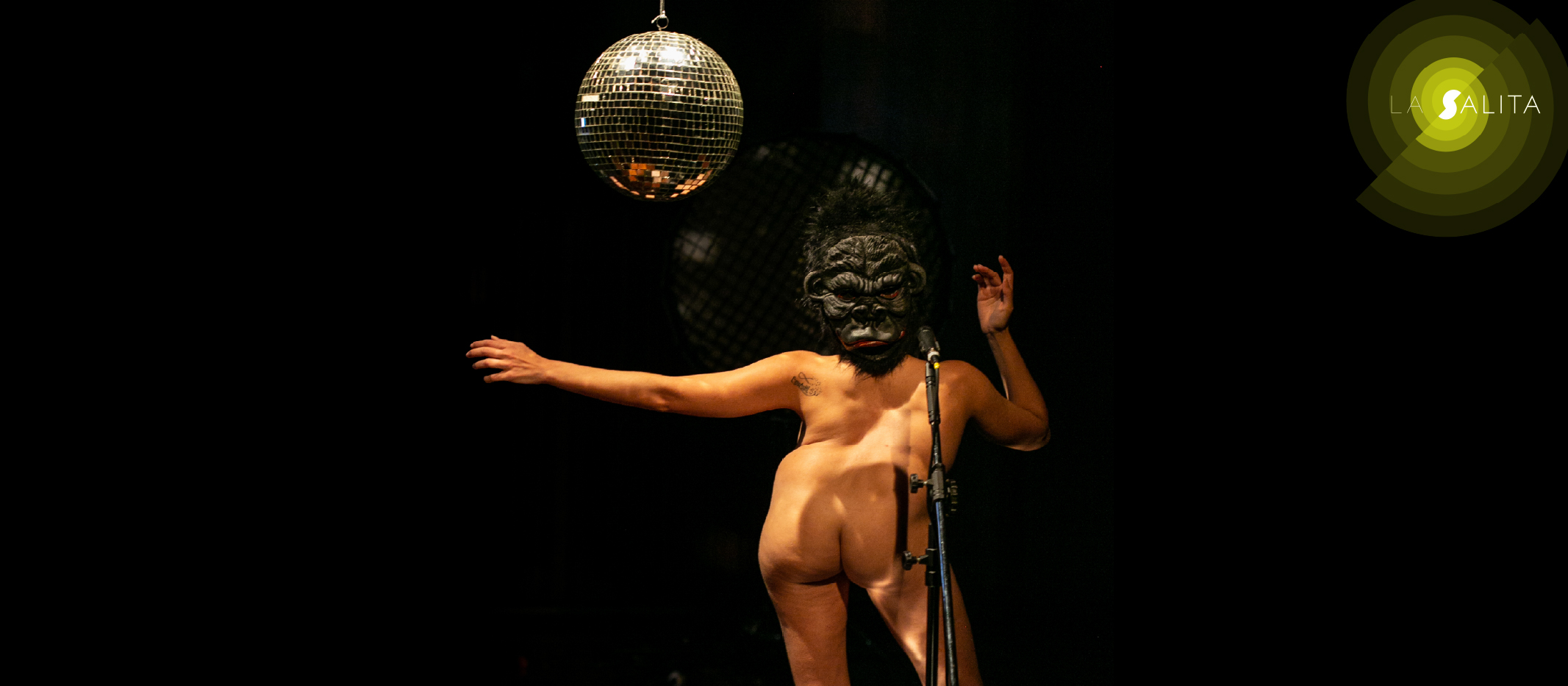
Monga
Synopsis
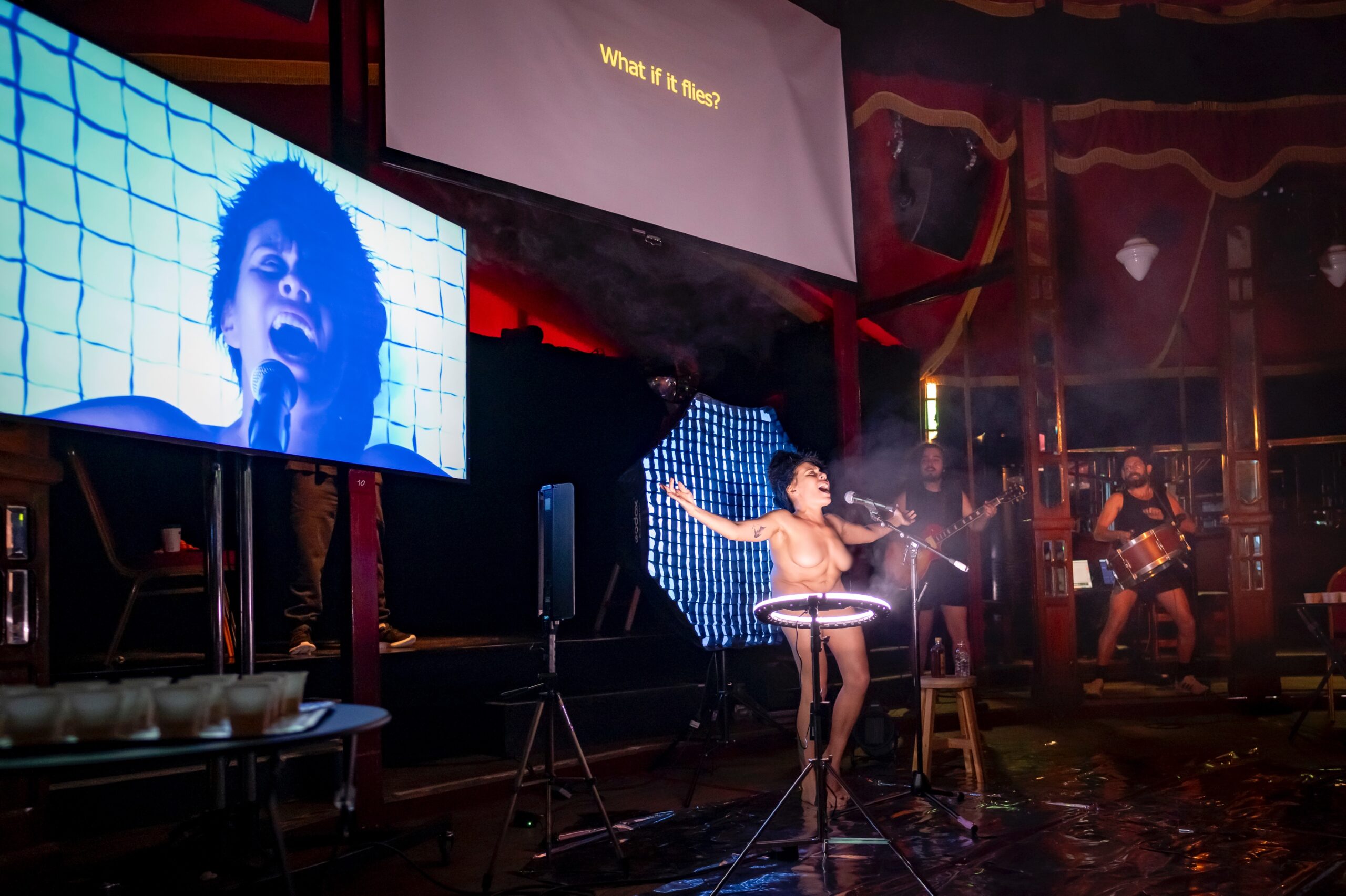
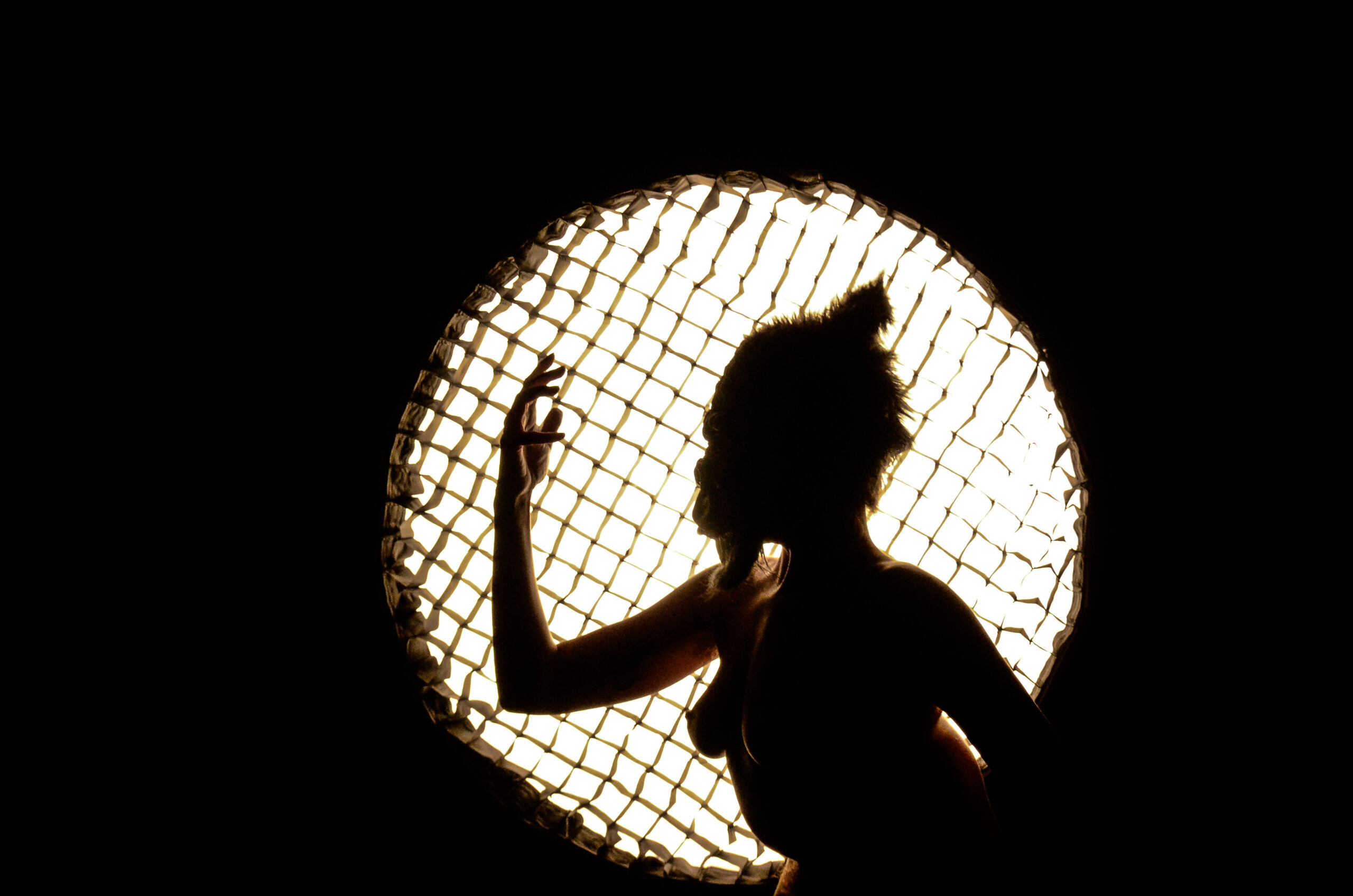
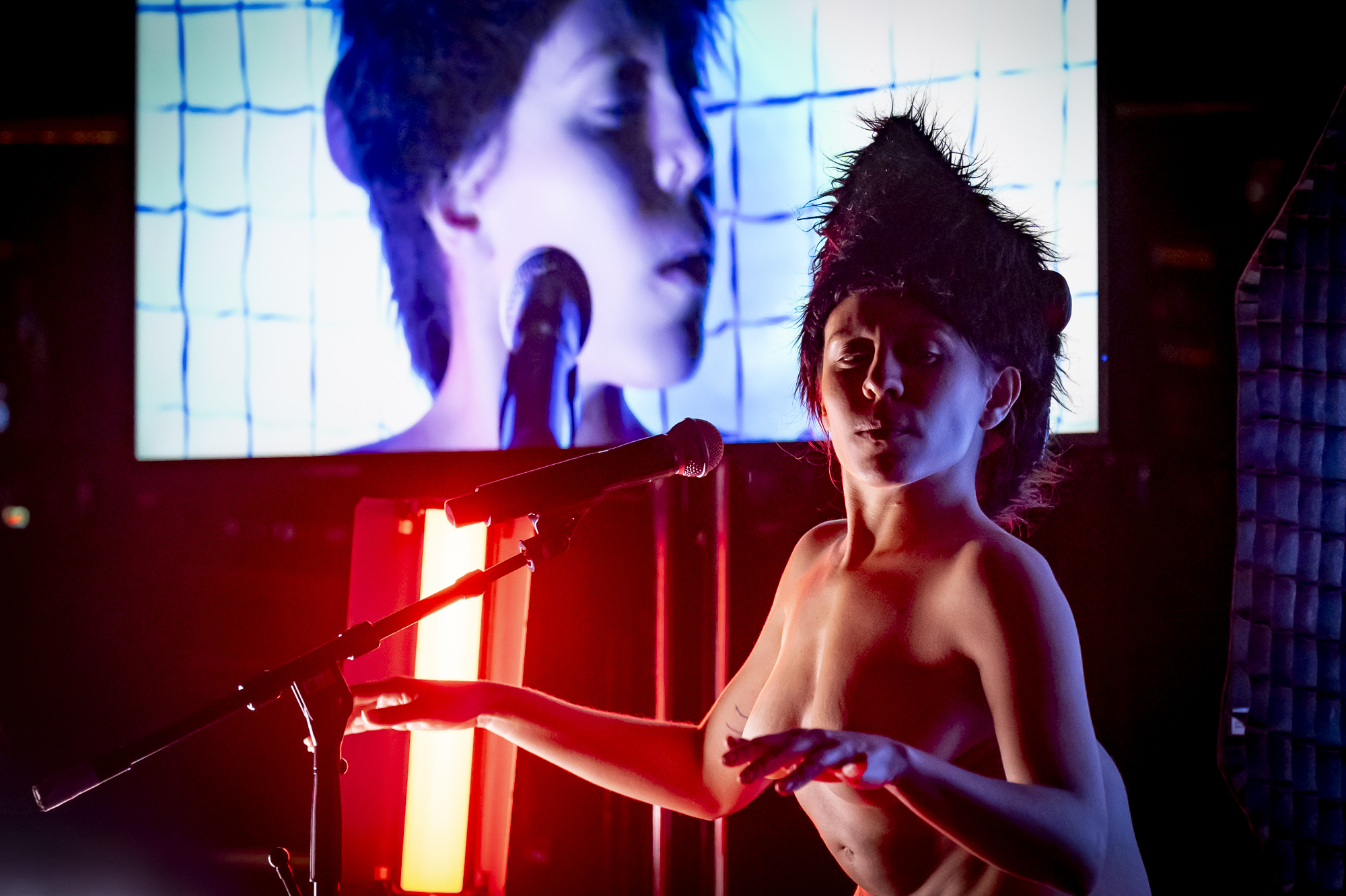
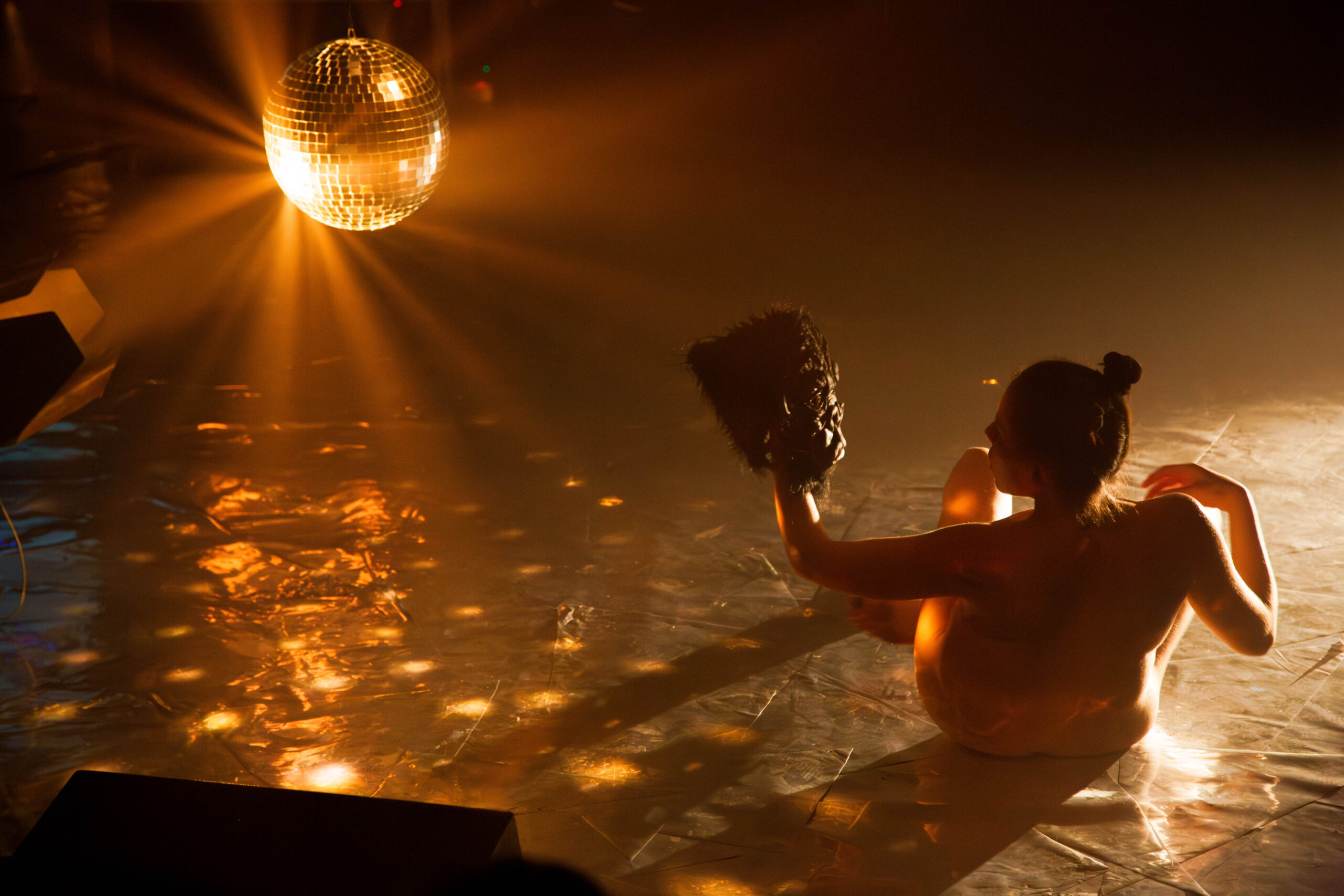
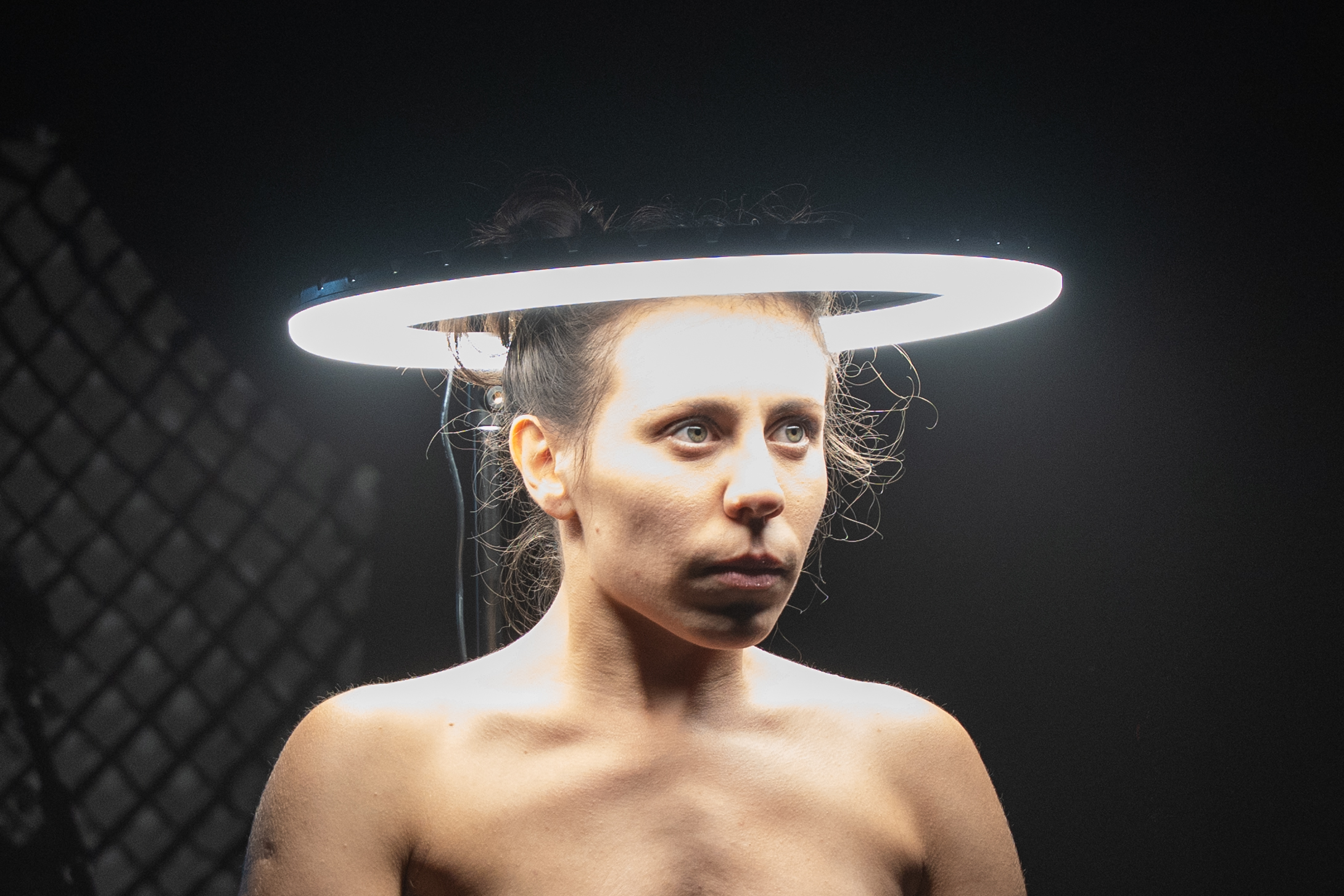
The Auditorio de Tenerife presents Monga at La Salita, a production by Brazilian actress and director Jéssica Teixeira, who uses her own body as the starting point for her dramaturgical and theatrical exploration. Following her debut production, E.L.A. (2019), Teixeira returns with Monga (2024), a work that deliberately moves away from conventional storytelling. Revisiting the disturbing realities of the past without resorting to sensationalism, she challenges established myths and seeks to construct alternative ways of imagining the world. The production draws inspiration from the life of Julia Pastrana, a 19th-century Mexican performer and singer who lived with generalised congenital hypertrichosis, a condition characterised by excessive hair growth across the body and face. Through an act of theatrical evocation, Teixeira sets out to dance, perform and sing, celebrating the artistry and beauty of the Mexican performer.
Jéssica Teixeira introduces the production in her own words: ‘I’m not afraid of my body. If I were, would that make you feel more comfortable? When someone is afraid of another person, they can become capable of doing anything to them. Where does that fear come from? Have you ever stopped to think how far it might go? I’ll tell you one thing: I don’t trust people who are good at hiding their fears, or those who pretend that everything is fine. Then again, I even have friends like that. So come and join us! Make yourselves at home. You’re more than welcome. We’ve got cachaça, and it’s on the house.’
‘Can you imagine yourself at 100?’ Beginning with this question, Monga invites audiences to examine their own lives and attempt to unravel some of their deepest questions: at what point was our imagination stifled, and when did we abandon our visions of the future? Drawing on a range of theatrical techniques and psychoanalytic approaches, Teixeira revisits the story of Julia Pastrana, a Mexican woman who was exhibited under the dehumanising label of the ‘monkey woman’ and whose life became emblematic of the exploitation associated with 19th-century freak shows.
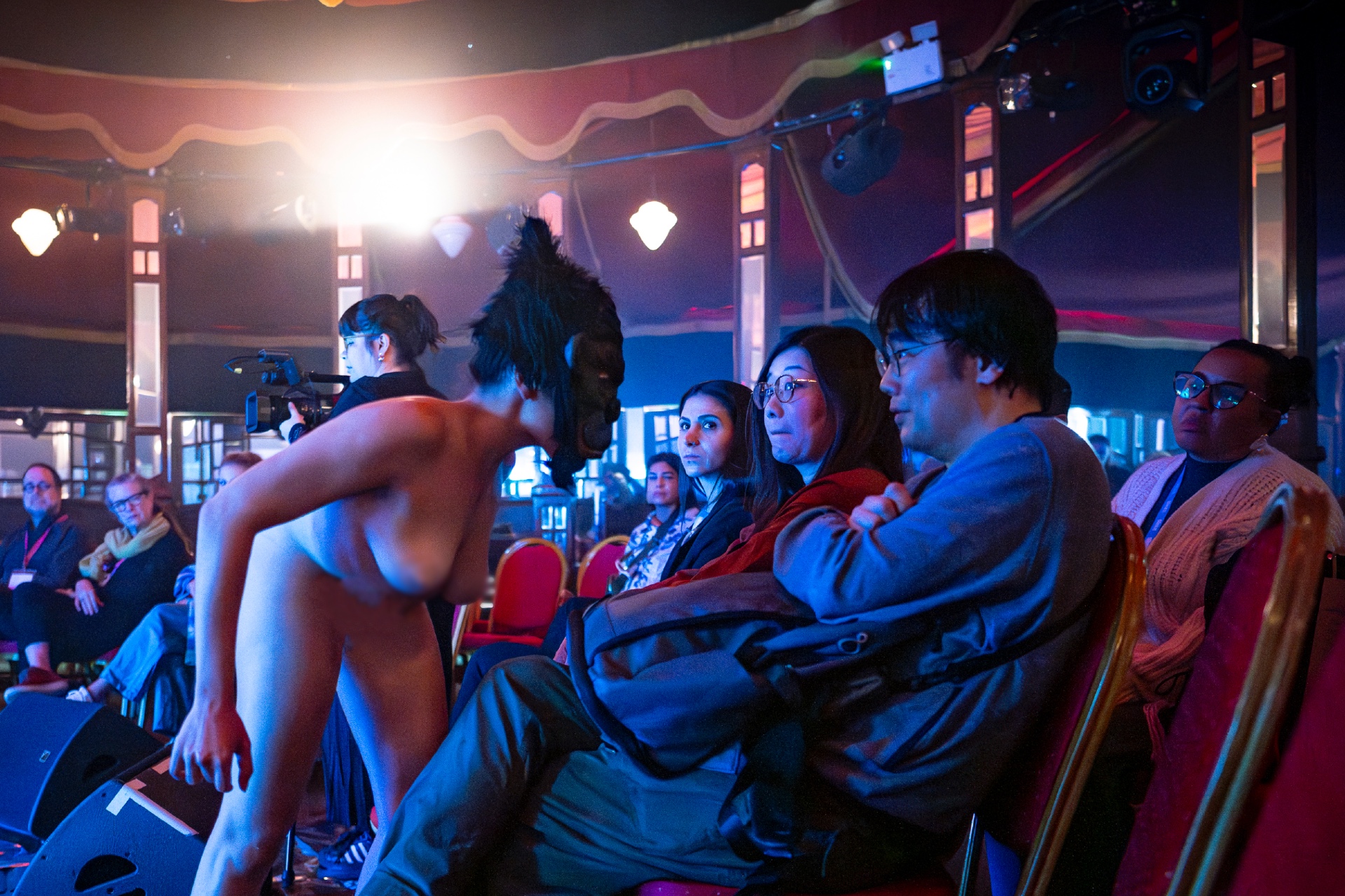
On stage, Teixeira evokes Pastrana’s 26 years of life, including the inhumane conditions in which she worked as a dancer, performer and singer, alongside the long history of exploitation, greed and sensationalism surrounding her image after her death. These intersecting temporal and geopolitical perspectives are woven into the poetic and unsettling dramaturgy of Monga. Rather than pursuing the vulnerable, those unable to escape or those who fall behind, the production turns its attention towards the mechanisms of fear, exclusion and spectacle. The daring nature of Monga lies in the actress’ willingness to embrace her position as an outsider, both in life and on stage, and to become increasingly comfortable inhabiting that space. The actress and director returns the audience’s gaze, confronting spectators with their own reactions and exposing the discomfort that arises when the usual relationship between performer and observer is reversed. The production draws on the conventions of psychological horror, punctuated by nervous laughter and moments of acute embarrassment.
There will be no formal post-show discussion, as the physical demands of the performance leave the actress exhausted. However, Teixeira will greet audience members informally as they leave the venue.
The performance is in Brazilian Portuguese, with Spanish surtitles, and includes Spanish Sign Language (LSE) interpretation.
Perfomer and creator
Artistic datasheet
Direction, dramaturgy and performance: Jéssica Teixeira
Artistic direction: Chico Henrique
Musical direction and live music: Luma
Technical direction and lighting design: Jimmy Wong
Video and photographic direction; camera operation: Ciça Lucchesi
Physical training: Calixto
Stage management: Aristides Oliver
Production: Corpo Rastreado
Production companies: Catástrofe Produções and Corpo Rastreado
Distribution: Corpo a Fora and Farofa
Gallery

Multimedia
Additional information
Tickets
Important information for audiences
Age guidance: Recommended for audiences aged 16 and over.
Photosensitivity: This production includes flashing and strobe-effect lighting, which may trigger seizures or other adverse reactions in people with photosensitive epilepsy or related sensitivities.
Sound: The performance includes periods of loud sound that may cause discomfort to noise-sensitive audience members.
Nudity: The production contains scenes of nudity.
Stage smoke: The performance uses theatrical smoke effects.
Doors at La Salita open between 15 and 5 minutes before the start of the show.
Once the venue doors have closed to begin the event, no further entry will be permitted.
Admission is restricted to those aged five and over.
If you wish, you can check the general terms and conditions of purchase and the venue regulations.
If you have any questions while purchasing your tickets, please contact taquilla@auditoriodetenerife.com or call 922 568 625 from Monday to Friday, 10 a.m. to 2 p.m., except on public holidays.